Image

The History of Sark: From Ancient Settlements to Modern Democracy

From ancient settlements and medieval monks to a unique feudal heritage, wartime occupation and modern-day independence, discover the fascinating history of Sark, one of the Channel Islands' most remarkable treasures.

An Island Like No Other

There are few places in the world where the past feels quite so close as it does on Sark. Set in the waters of the English Channel, between the coasts of England and France, this tiny island has a history far greater than its size might suggest. With its winding lanes, dramatic cliffs, traditional farming landscapes and absence of motor cars, Sark has preserved a character that is increasingly rare in the modern world. Yet beneath its peaceful appearance lies a story of ancient settlers, religious devotion, political intrigue, mining ambitions, wartime courage and extraordinary independence. Sark's history is not simply a story of an island. It is the story of the people who shaped it, defended it and fought to preserve its distinctive way of life.
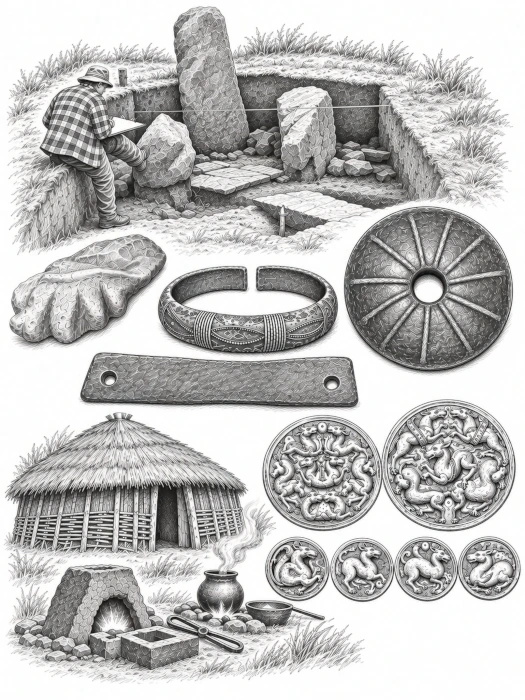

The Earliest Islanders – A Journey into Prehistory

Long before the Seigneurie, the harbour or the familiar island lanes existed, Sark was home to early farming communities. By around 1400 BC, farming communities were growing grain, keeping sheep and cattle, making pottery and working bronze. Their everyday tools were fashioned from Sark's own dolerite stone, a reminder of the close relationship between the island's inhabitants and its natural resources. The island also had connections beyond its shores. Ancient traders visited, and a remarkable discovery in 1719 revealed that a refugee from the Gallic Wars had apparently buried Dacian silver on Sark. The treasure, now known as the Sark Hoard, offers a tantalising glimpse into the island's ancient past.

Image

Saints, Monks and the Arrival of Christianity

Tradition tells us that St Magloire, a Breton saint, arrived on Sark in 565 AD. He is said to have founded a monastery above Port du Moulin, where a peaceful religious community developed. The monastery reportedly included enclosed land and a watermill, suggesting that even these early religious settlements were closely connected to farming and everyday island life. Viking raids later swept across the Channel Islands, devastating religious communities and leaving traces of Norse influence in local place-names.

St Magloire

The Norman Connection and a Lasting Loyalty

In 933 AD, Sark became part of the Duchy of Normandy. When William the Conqueror crossed to England in 1066, Sark became linked to the English Crown. The island's destiny took a decisive turn in 1204, when King John lost Normandy to France. The Channel Islands chose to remain loyal to the English Crown rather than become part of France. During the medieval period, Sark supported a small but thriving community of farmers and fishermen. Life revolved around the land, the sea and the obligations of the feudal system. The Black Death and the Wars of the Roses disrupted communities, while piracy became an increasingly serious problem.

1565 – The Birth of Modern Sark

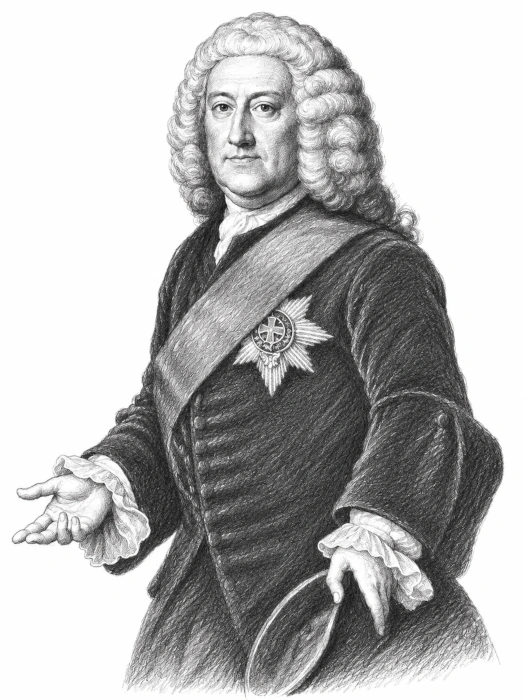
One of the most important dates in Sark's history is 1565. Queen Elizabeth I granted the island to Helier de Carteret, Seigneur of St Ouen in Jersey. The grant came with a strict condition: Sark had to be colonised and defended by at least 40 men capable of bearing arms. De Carteret divided the island into 40 tenements, each associated with military obligations. Families from Jersey settled on Sark, bringing with them their traditions, customs and religious beliefs. Many were Presbyterians seeking both religious freedom and new opportunities. In 1583, Sark was granted the power to make its own laws. By 1604, the 40 tenants had developed into a governing body known as the quarantaine, which formed the basis of Chief Pleas, Sark's parliament.

Helier de Carteret

The Seigneurie – Power, Privilege and Tradition

For generations, the Seigneur exercised considerable authority over the island, including the collection of rents, control of land and a number of traditional privileges. Among the most unusual were the exclusive rights to keep an unspayed female dog and to own pigeons. The island's government, Chief Pleas, was closely connected to its 40 original tenant families. Over time, elected deputies were also included, but representation remained heavily influenced by landholding.

Civil War, Conflict and the Le Pelley Family

The English Civil War brought political division to the Channel Islands. Sark's Seigneur supported the Royalist cause, while Guernsey's Parliamentarians opposed the King. In 1643, Guernsey's authorities confiscated Sark and its revenues. During the Seigneur's exile, Judge Jean Le Gros and his allies took control of the island. Le Gros was a wealthy merchant who used mortgages and land transactions to increase his influence, often at the expense of struggling farmers. His actions created lasting resentment. When King Charles II restored the Seigneur in 1661, Sark was left in a troubled financial and political state. Disputes continued for years, eventually leading to the dismissal of Sark's traditional juge and jurés in 1675 and their replacement by a Seneschal. In 1730, Susanne Le Pelley, the granddaughter of Judge Le Gros, purchased Sark. Her family's estate at La Peronnerie was transformed into La Seigneurie, with gardens and a dovecote.

A Changing Island in the Eighteenth Century

The eighteenth century brought prosperity to some islanders, particularly through connections with Guernsey's privateering trade. Yet life was not always comfortable. By the 1780s, rural poverty and alcoholism were concerns, while revolutionary unrest across Europe created anxiety. The threat of French invasion prompted the island to strengthen its defences. Cannon were installed, artillerymen arrived and the Sark Militia began drilling at l'Eperquerie.

Mining on Little Sark – The Search for Riches

The nineteenth century introduced one of the most ambitious chapters in Sark's history.

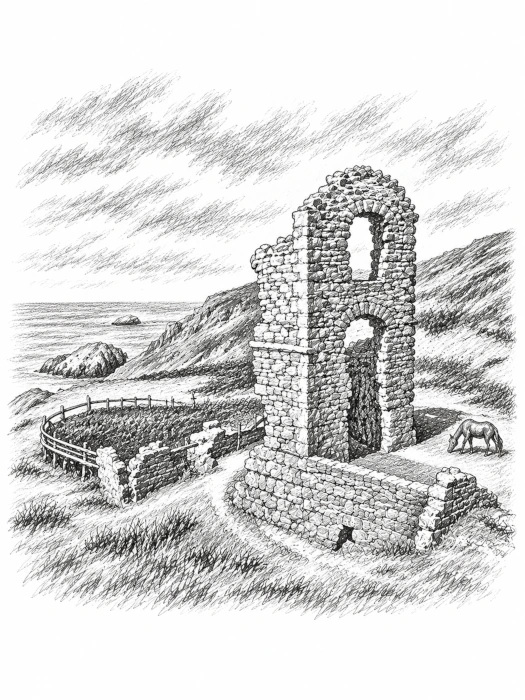
In 1835, the discovery of copper ore sparked a mining boom. Soon, more than 200 Cornish miners and their families arrived on the island, transforming Little Sark into an industrial landscape. The mines at Port Gorey attracted investors hoping to discover valuable deposits of silver and lead beneath the island's cliffs. For a time, the prospect of mineral wealth promised a brighter future. But the reality proved disappointing. The seams were limited, extraction costs were high and the quantities of valuable minerals were relatively small. The mining enterprise eventually collapsed, leaving behind the remains of its industrial ambitions.

Silver Mines

Dame Marie Collings and the Rise of Tourism

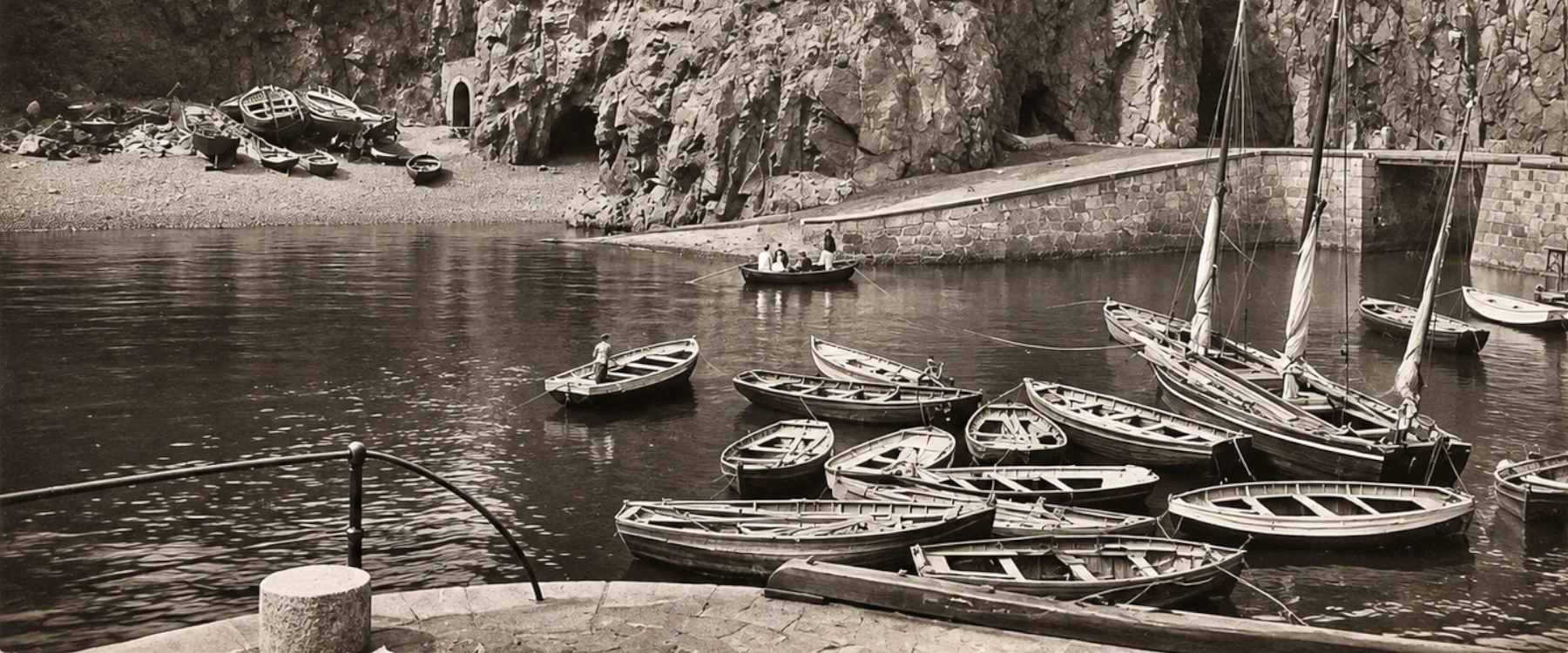
In 1852, Dame Marie Collings, daughter of Guernsey privateer-tycoon Jean Allaire, purchased Sark for £1,600 after foreclosing on the estate. The Seigneurie was improved, its gardens developed and the island's church enlarged. Creux Harbour was also rebuilt. As steamship services from Guernsey became more regular, Sark grew increasingly accessible to visitors. Hotels opened, photography became popular and the island began attracting people seeking beautiful scenery, fresh air and a slower pace of life.

La Coupée – The Narrow Bridge Between Two Worlds

La Coupée is a narrow ridge of land connecting Great Sark with Little Sark. With steep drops to the sea on both sides, it is one of the island's most dramatic landmarks. Protective railings were added in 1900, making the crossing safer. In 1945, a narrow concrete road was built across the isthmus by German prisoners of war under the direction of the Royal Engineers. Today, La Coupée remains one of Sark's most photographed and celebrated locations.

The First World War – A Community Remembers

The First World War left a lasting mark on Sark. Eighteen island men lost their lives, a significant sacrifice for such a small community. Following the war, Chief Pleas began recording its minutes in English rather than French, reflecting the changing times. In 1927, Sibyl Beaumont inherited Sark from her father, W.F. Collings.

The German Occupation – Courage and Resilience

The Second World War brought one of the darkest and most challenging periods in Sark's history. German forces occupied the Channel Islands in 1940. On 4 July, Major Albrecht Lanz arrived on Sark to inform the island's rulers that German military occupation had begun. For five years, the island lived under German rule. Dame Sibyl Hathaway became a remarkable symbol of resilience. She maintained her authority, defended the dignity of her people and reportedly faced German officers with extraordinary composure. British Commandos carried out raids on Sark, the most famous being Operation Basalt on the night of 3–4 October 1942. Sark was finally liberated on 10 May 1945, one day after Guernsey.

Operation Basalt

Rebuilding and Preserving Sark's Heritage

The post-war years brought renewed development. The Maseline Jetty was completed in 1947, improving access to Sark and supporting its growing tourism industry. Sibyl Beaumont continued to promote the island's distinctive character until her death in 1974. Her grandson, Michael Beaumont, devoted more than 40 years to enhancing the famous Seigneurie Gardens. His work helped secure their preservation in trust for future generations.

1990 – Sark's Unusual Attempted Invasion

In August 1990, a Frenchman named André Gardes arrived on the island claiming to be the rightful holder of the Seigneur's title. He announced his intention to take over Sark and began putting up posters declaring his plans. However, the island's constabulary intervened and arrested him before his ambitions could develop further. The incident lasted less than 24 hours and became one of the most unusual episodes in Sark's modern history.

2008 – A New Era of Democracy

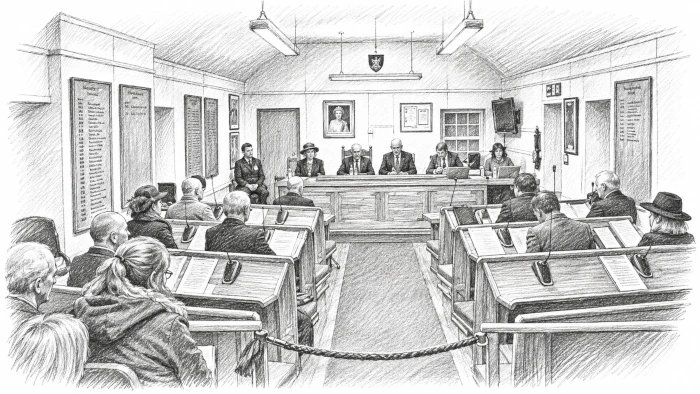
For centuries, Sark's government had been closely tied to its original tenant families and the Seigneurial system. In April 2008, major changes were introduced to the island's laws and government. Universal suffrage was established, and Chief Pleas was transformed into a fully elected assembly of 28 members. The first election under the new system took place in December 2008. These reforms represented a major milestone in Sark's history, ending centuries of representation largely based on hereditary landholding.

Chief Pleas

Sark Today – A Living Piece of History

Today, Sark remains a Crown Dependency with a distinctive identity and a small, close-knit community.It is still proudly car-free, with transport largely based on walking, cycling, horse-drawn carriages and tractors. Its dark skies, protected as one of the world's first Dark Sky Islands, attract visitors interested in astronomy and the natural world. The island's ancient lanes, dramatic cliffs, hidden beaches and historic buildings offer a glimpse into a way of life that feels increasingly rare. From the earliest farming communities to medieval monks, Seigneurial rule, mining ventures, wartime occupation and modern democratic government, Sark has continually adapted while retaining its character.

Discover Sark

Sark is more than a beautiful island in the Channel. It is a place where centuries of history, tradition and natural beauty come together. Every harbour, lane, cliff and historic building has a story to tell. Whether you are exploring the gardens of La Seigneurie, walking across La Coupée, discovering the remains of the old mines or simply enjoying the peaceful island atmosphere, Sark offers a connection to the past that few places can match. We celebrate the island's history, heritage, people and unique way of life.

Sark's story has been centuries in the making and it continues today.